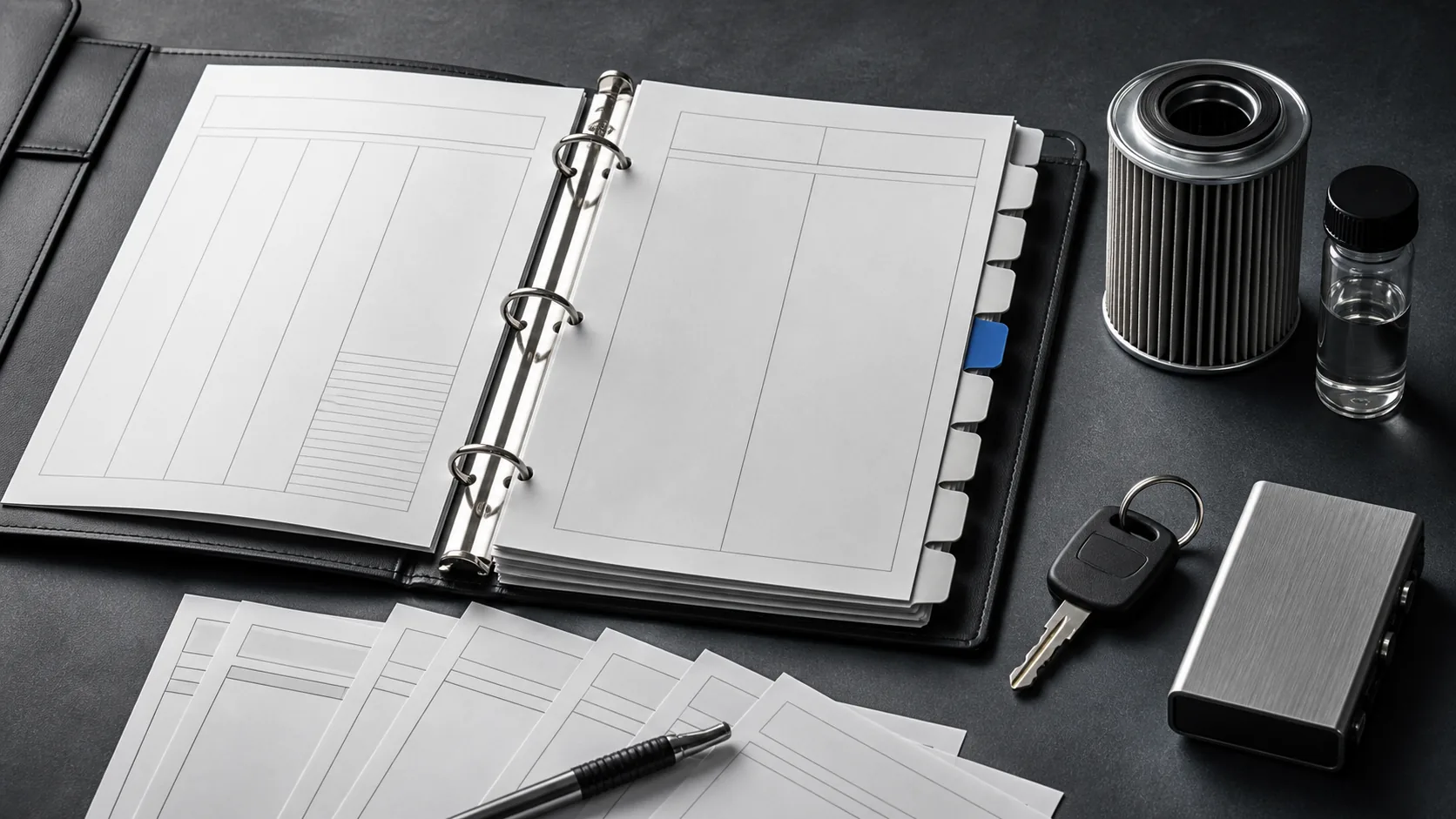
Short answer: keep dated invoices and receipts that identify the vehicle, mileage, service performed, parts and fluids used, and the repair facility or person who completed the work. Pair them with the manufacturer schedule and the service contract’s maintenance requirements.
Which vehicle? What service? When? At what mileage? With which parts or fluids?
What to keep
- Owner’s manual and manufacturer maintenance schedule
- Invoices for oil, filters, coolant, transmission, belts, brakes, inspections, and repairs
- Odometer readings at every service
- Itemized parts, fluid specifications, labor, shop identity, and payment proof
- Completed repair orders, diagnostic reports, recalls, and warranty work
- The signed service contract and every claim communication
The FTC says a warranty company may ask for maintenance records and recommends keeping records such as oil changes, tire rotations, belt replacement, brake work, and inspections.
Use a simple vehicle file
Create folders for contract, maintenance, repairs, claims, and cancellation. Name digital files by date, mileage, and service. Keep searchable scans and a backup. A one-page index can list each service chronologically and link it to the invoice.
Compare actual service with the schedule for your driving conditions. Do not substitute a shop’s generic schedule without checking the owner’s manual. If the contract imposes additional requirements, save that clause with the relevant records.
Document do-it-yourself maintenance
Save dated parts and fluid receipts, product specifications, photographs, mileage, and a short service log. Record quantity, method, and disposal where relevant. DIY proof may be evaluated differently by different contracts, so read the evidence requirement before relying on it.
Reconstruct missing records
- Ask dealerships and independent shops for duplicate invoices.
- Check manufacturer apps, online service histories, email, and payment statements.
- Request parts-store receipts or loyalty-account histories.
- Create a gap list rather than inventing dates or mileage.
- Ask the administrator what alternative proof it will accept.
Never alter a document. A clear gap is better than an inaccurate record that undermines the entire claim file.
Build the claim packet
Send only what the contract or administrator requests, preserve originals, and keep proof of delivery. Pair records with the diagnosis, estimate, claim number, authorization, inspection report, and final repair order. Follow the claim-filing steps; if a denial cites maintenance, use the denial checklist.
Frequently asked questions
Are bank statements enough?
They may show payment but usually do not identify the service, vehicle, mileage, parts, or fluids. Use them as supporting evidence while requesting an itemized duplicate invoice.
How long should I keep the records?
At minimum, keep them through the contract term and any unresolved claim or cancellation period. Longer retention may help with resale, tax, or legal needs; ask an appropriate professional about your situation.
Conclusion
Maintenance records work when they are complete, chronological, vehicle-specific, and easy to verify. Start the file when you buy the vehicle or contract, not after a breakdown.